
Vol. 2: Making Meaning
Artifacts, water, trash, and a forsaken cathedral


What happens when four friends from a writing class (International Writers’ Collective) wander the canals of Leiden, reimagining timeless monuments?
Spill Your Dreams, Vol. 2!
Each week in January, we’ll drop a new piece inspired by that magical day. Here be the chronicles of our writing session, to the best of our facilitator’s abilities.
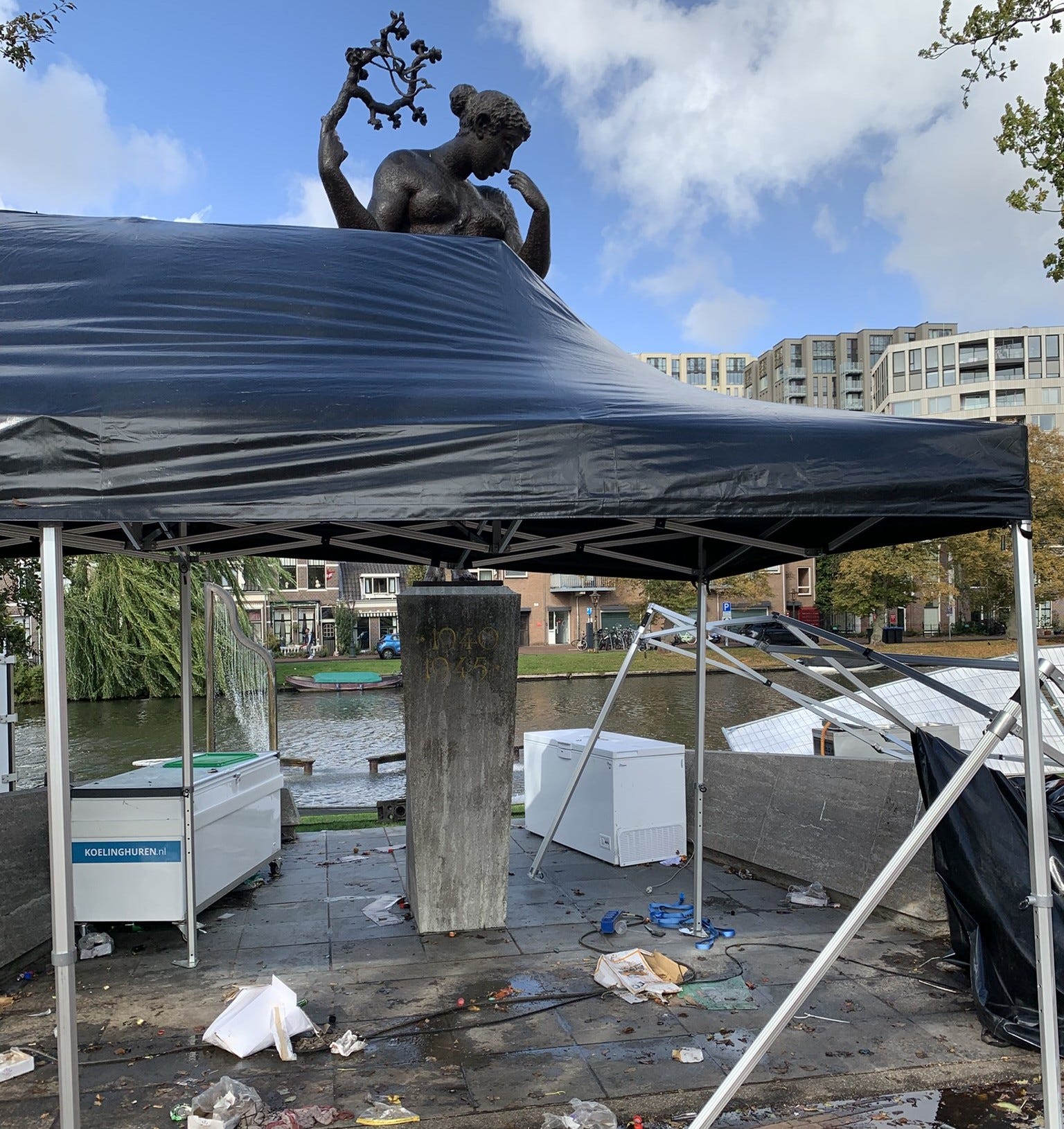
I dropped a pin on the statue of Our Lady of Peace (Bevrijdingsmonument) along the Leiden signel waters1, and told my friends to meet me there, rain or shine.
The October sun shone gloriously, but Our Lady of Peace had been utterly trashed by the leftovers of yesterday’s carnival. There was shit all over the street, as cleanup crews haphazardly disassembled ugly shade structures. Perfect.
Today’s session was about the creation of subjective meaning in our puny minds. Did the meaning of a statue to commemorate the end of World War II change when covered in the rubble of a holiday to celebrate Dutch liberation from a Spanish siege? Certainly. In this moment, Lady Peace was invisible.
Each participant arrived with an artifact—an item from our lives with sentimental value. We took turns presenting our objects and giving our friends a chance to say what it looked like to them before revealing what it meant to us. The sentimental became novel in another’s mind.
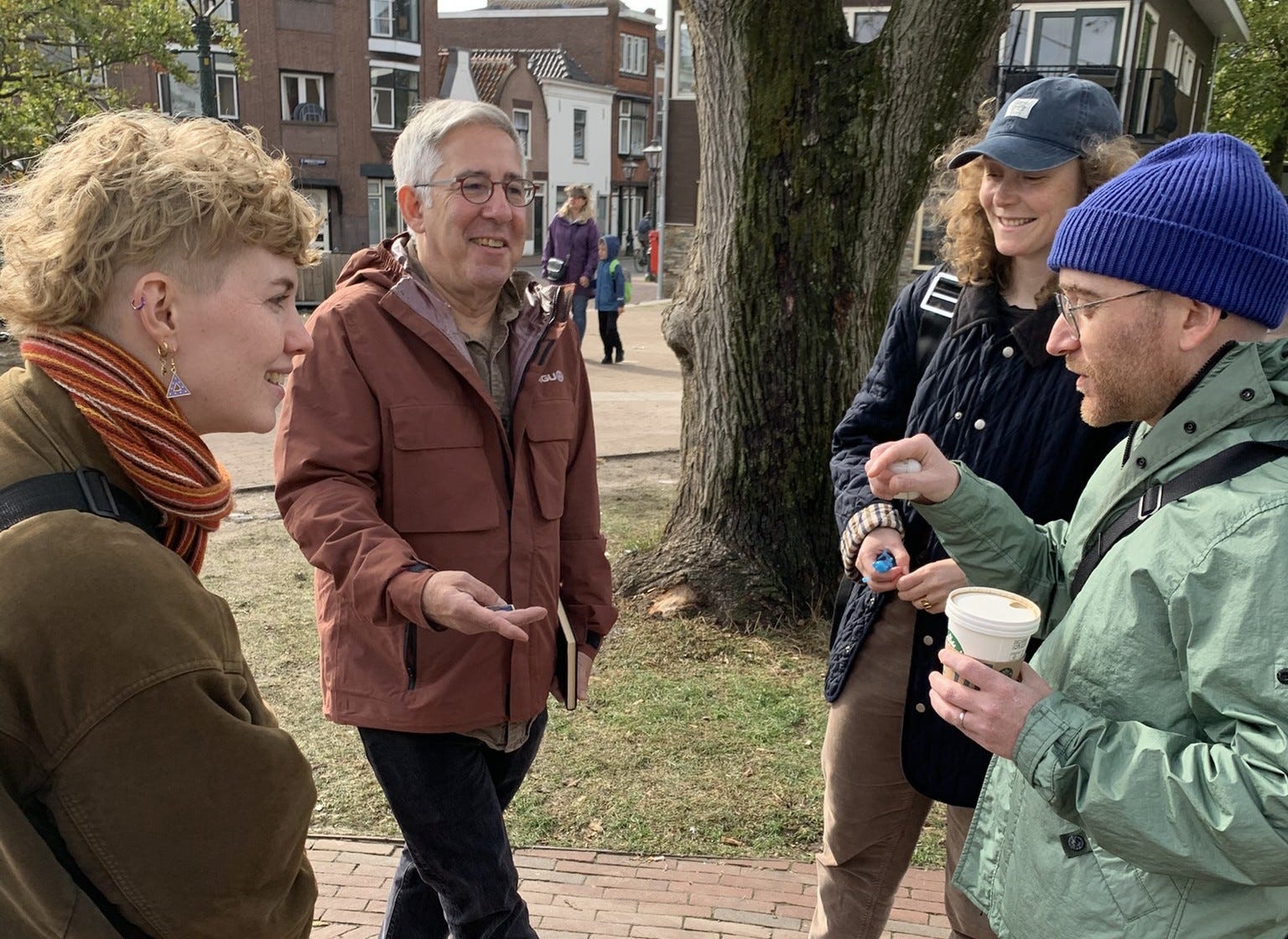
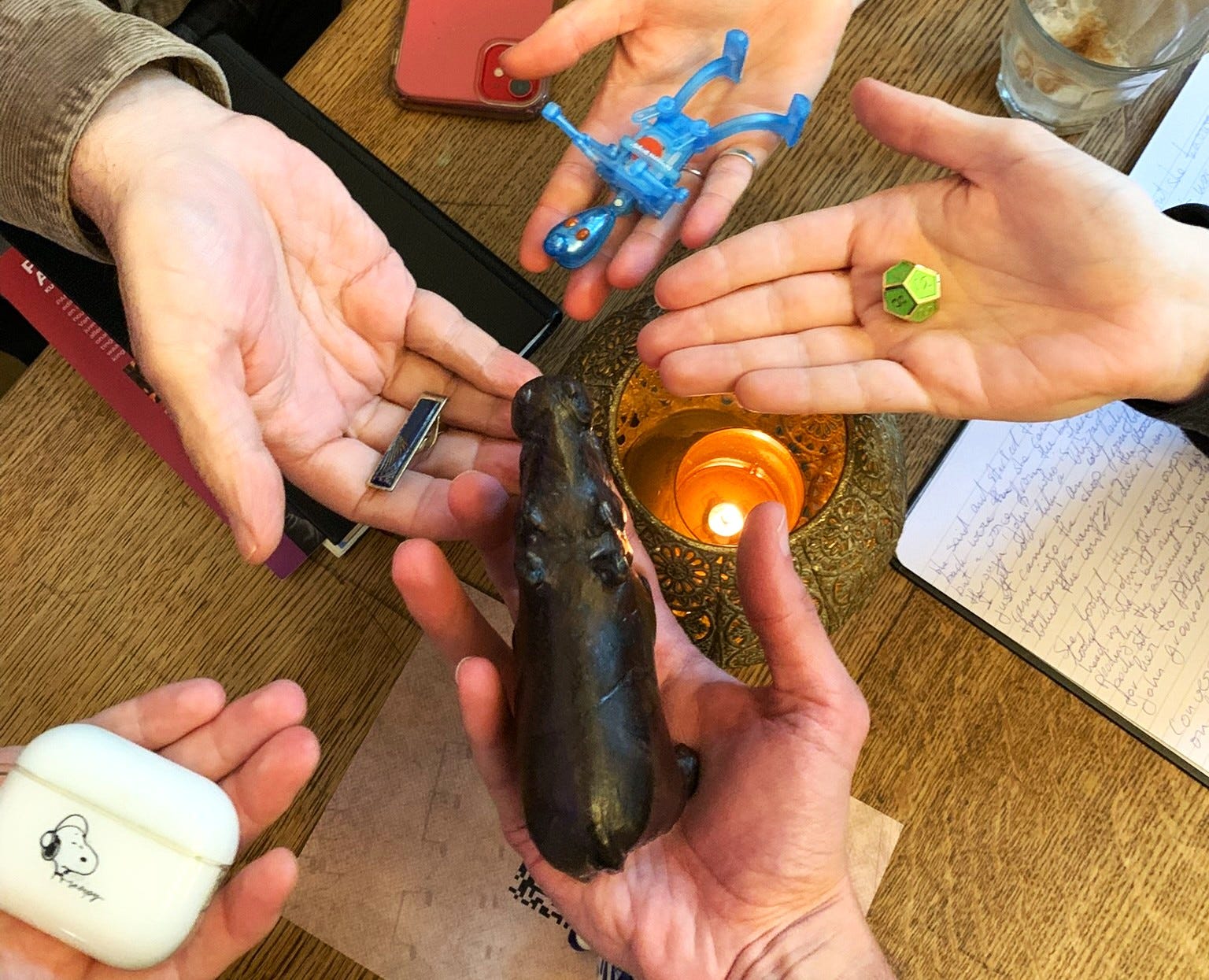
We then stashed our treasures and played a game of “What the Heck is That,” as we wended (a word I’d later pick up from Genevieve’s poem and fall in love with) around Leiden, pointing out random things and trying to guess their meaning.
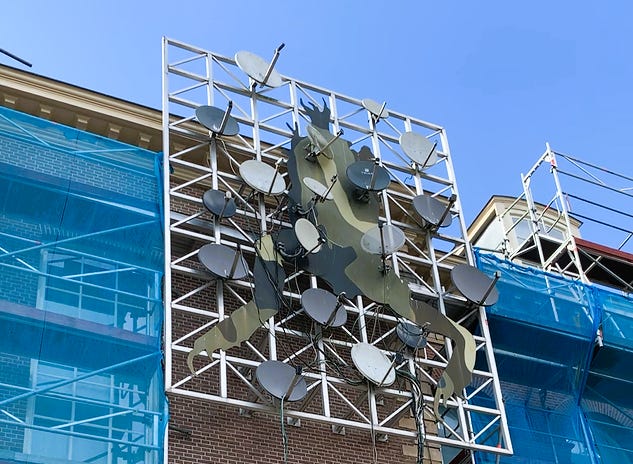
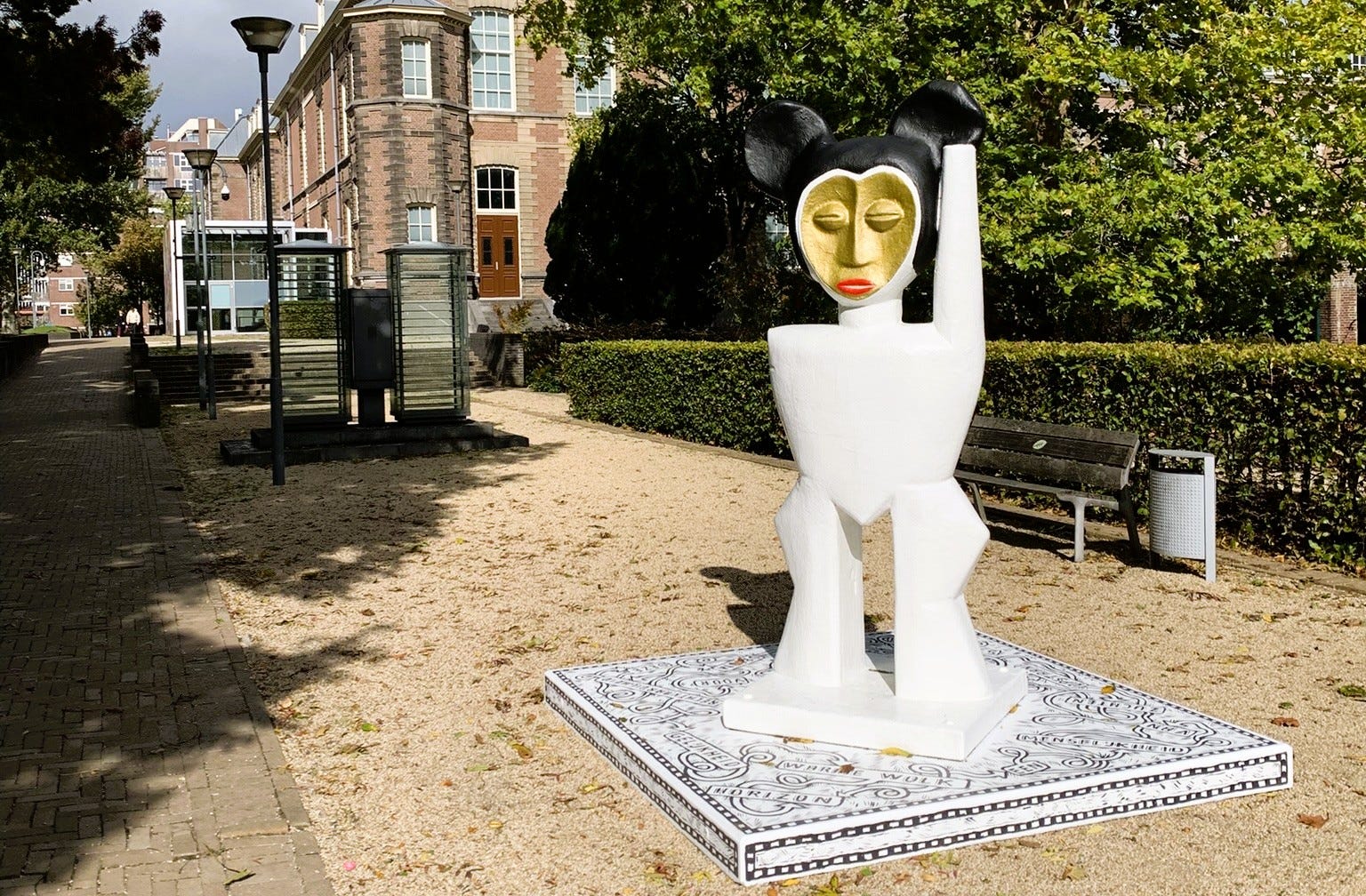
My plan led us to a rather sad and windy Rembrandtplaats, commemorating the humble alley where the great artist was born, with a bizarre self-reflective statue worthy of another WTF. We wrote briefly, trying to keep our hands from freezing.
We continued to a surprise museum, which turned out to be the Japan Museum. It was situated in the former home of the great innundator, Paulus Buys. During the Spanish siege of 1574, he opened the dykes and flooded the besieger’s cannons, thus liberating the city, thus spurring yesterday’s celebration.
The museum did not disappoint. It was a maze of rooms featuring a collection of curios, if I’ve ever seen one—block prints, kimonos, walrus-ivory figurines of cats tangling with octopuses, taxidermied creatures and pickled specimens, odd quotes from Dutch traders such as “In keeping with Dutch tradition, I have found myself a lovely sixteen-year-old Japanese companion, not to be mistaken for a European,” and a highly immersive photography exhibit by Anaïs López about her experience living beside the Kamogawa River while grieving the death of her sister.
This part of our day was choose-your-own-adventure. I prefer to explore museums at my own pace, not to have my subjective interpretations awkwardly clash with my hypersensitivity to thinking about what my acquaintances might be thinking, and feeling a deep urge to accommodate them. Of course, that’s my problem, but I hope everyone benefited from it.
During many moments in the museum, I was tickled by pure wonder. The art and ambiance took over my mind and body. I drifted through the experience, legless, like a ghost engrossed, letting the exhibit absorb and pass through me. I awoke from my trance with the phone alarm I’d set for our final activity.
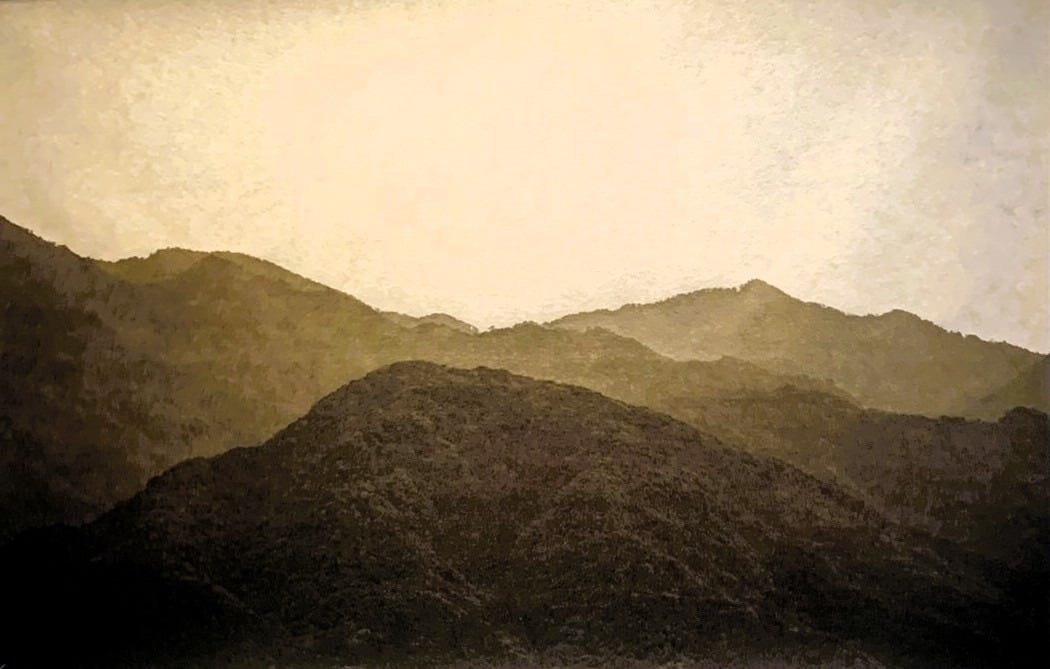
We wended again to Pieterskerk Café for a soothing hot beverage and 37 minutes and 4 seconds of writing. This cozy spot was nestled inside a defunct cathedral converted into a national monument in the 1970s.
When it came time to write, the Japan Museum had such an effect on me that the impact of the initial activity on making meaning had completely faded. My creative sensibilities got stuck on the riparian themes of that final photo exhibition. I could not stop making water metaphors. It was so intense that I wrote “I am addicted to water” as the first sentence of my story, which devolved into an unsettling exchange between a father and son who’d escaped the city to a riverside cabin. We shared our pieces briefly. I disavowed my own and promised to pick it back up on a drier day.
We hugged each other in the golden hour outside Pieterskerk and wended (I’m addicted to this word) our way home with big smiles on our faces. It was a good day.
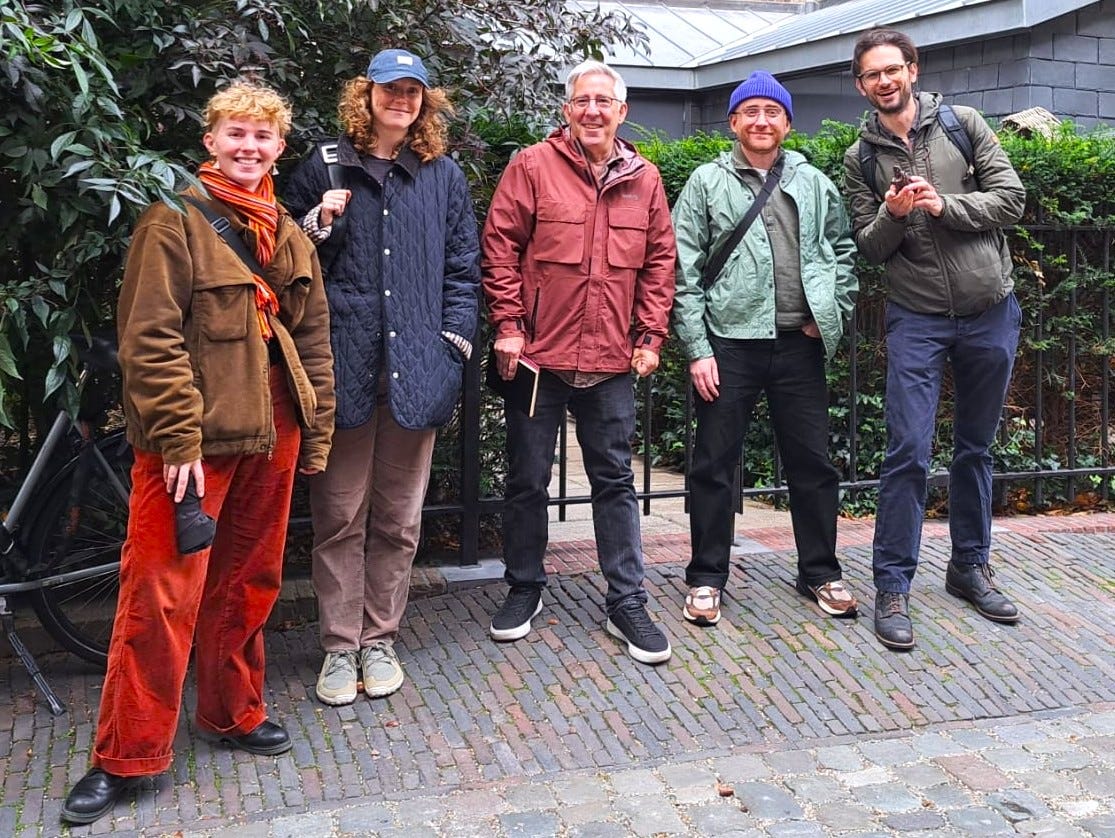
Read our pieces from Vol 2


Signel waters once served as defensive waterways surrounding medieval Dutch towns, similar to a moat, but for an entire urban core. These waterways are in contrast to canals, which provide transportation within and between cities.